
Fuel-Driven Price Shock: Caraga Region Inflation Surges to 5.5% in March on NewsLine Philippines - Building Information Highway for the Community
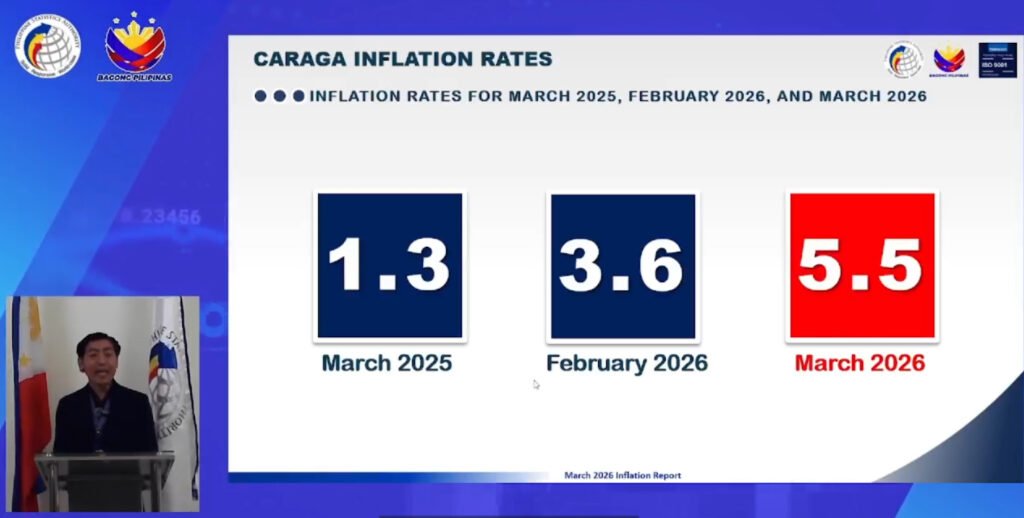
BUTUAN CITY (April 15) — Inflation in the Caraga Region surged to 5.5% in March, up sharply from 3.6% in February, with fuel costs triggering a chain reaction across transport, food, and household expenses.
Data from the Philippine Statistics Authority shows the spike was overwhelmingly driven by transport, which accounted for 52.3% of total inflation pressure.
Fuel Prices at the Core
The numbers reveal a dramatic turnaround:
- Gasoline inflation: from -4.4% → 27.8%
- Diesel inflation: from 0.5% → 59.9%
- Transport inflation overall: from 0.8% → 11.9%
This reflects how quickly global oil shocks are filtering into local economies—especially in regions like Caraga, where mobility depends heavily on fuel.
Food Inflation Follows
The second major driver—food and non-alcoholic beverages (40.6%)—shows how fuel costs cascade into daily living:
- Rice: from -1.8% → 5.3%
- Eggplant: from -2.7% → 24.0%
- Squash and gourds: from 10.7% → 24.0%
Transport costs for farm goods are pushing prices upward, tightening supply chains and raising market prices.
Regional Disparities Widen
Inflation impact varied across provinces:
- Dinagat Islands — 7.7% (highest)
- Butuan City — 7.3%
- Agusan del Norte — 6.7%
- Surigao del Norte — 5.3%
- Agusan del Sur — 4.5% (lowest)
The variation reflects differences in geography, supply access, and local economic resilience.
A Familiar Pattern: Fuel → Transport → Food
The data underscores a now-familiar inflation chain:
Fuel price shock → higher transport costs → rising food prices → broader cost-of-living increase
For Caraga, a region with dispersed communities and long travel routes, this chain reaction is particularly strong.
Policy Tension in Focus
The surge comes as the national government maintains fuel excise taxes, arguing that suspending them would result in massive revenue losses.
But Caraga’s data highlights the tradeoff:
- preserving fiscal revenue at the national level
- while regional economies absorb accelerating costs
What Comes Next
If fuel prices remain elevated, inflation in Caraga may persist or even rise further—especially if transport and food costs continue to climb.
For households, this means shrinking purchasing power.
For local governments, rising service costs.
For policymakers, intensifying pressure to balance revenue stability with economic relief.
The post Fuel-Driven Price Shock: Caraga Region Inflation Surges to 5.5% in March appeared first on NewsLine Philippines.
Fuel-Driven Price Shock: Caraga Region Inflation Surges to 5.5% in March
Newspaper Updates PH
0 comentários :
Post a Comment